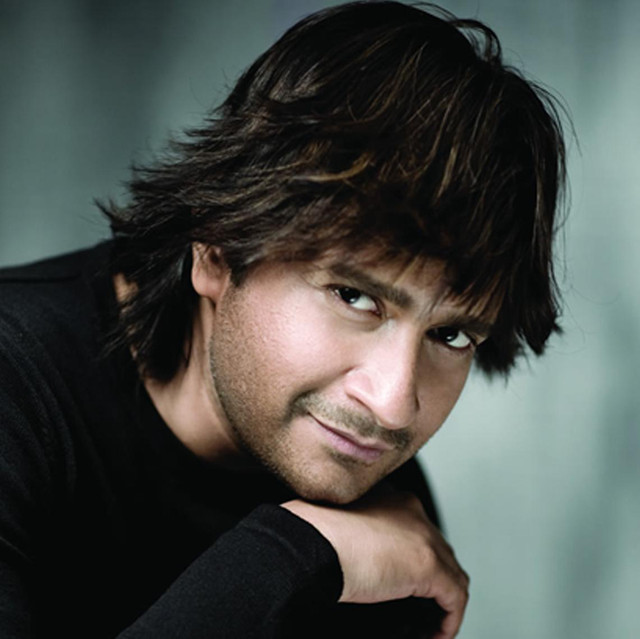
Biography
Biography of KK (Krishnakumar Kunnath)
Delhi childhood and education
Krishnakumar Kunnath was born on 23 August 1968 in Delhi to Malayali parents, Kanakavalli Kunnath and C. S. Nair, and grew up in New Delhi. He attended Mount St Mary's School and then Kirori Mal College at the University of Delhi, where he read commerce. At college he sang with the band Horizon and took part in the music society, winning notices on the Delhi festival circuit. He also acted in drama productions alongside peers who later entered filmmaking. After graduating he worked briefly as a marketing executive and later sold typewriters, jobs he soon left in order to sing.
KK had no formal musical training. He often said he learned songs by ear and cited Kishore Kumar, who also lacked classical grounding, as an early inspiration, along with R. D. Burman and, in Western music, artists ranging from Michael Jackson to Led Zeppelin. In 1994 he moved to Mumbai with a demo tape and little industry support, intending to make a living from music in the city's competitive recording scene.
Jingles and a playback debut
In Mumbai, KK gave demo tapes to musicians Louis Banks, Ranjit Barot and Lesle Lewis. Lewis, whom KK regarded as a mentor, called him for advertising work; his first jingle in the city was for Santogen Suiting via UTV. Over roughly four years KK sang more than 3,500 jingles in 11 languages, including familiar national campaigns. The work paid the bills, trained him for quick, precise studio sessions and introduced his voice to producers long before film credits appeared.
His playback career opened in South Indian cinema. For A. R. Rahman he recorded 'Kalluri Saalai' and 'Hello Dr.' in Kathir's Kadhal Desam (1996) and 'Strawberry Kannae' in the 1997 musical Minsara Kanavu. In Hindi, Vishal Bhardwaj cast him for his part of 'Chhod Aaye Hum' in Gulzar's Maachis (1996). These early songs established KK as a fresh studio voice even before most audiences knew his face.
The 1999 breakthrough
In 1999 Sony Music India, then establishing itself in the country, chose KK as an artist to introduce. The album Pal, written by Mehboob and composed and produced by Lesle Lewis with a live band, arrived as a pop-rock record in a market then dominated by remixes. Its title track and 'Yaaron' became fixtures at school and college farewells, while 'Aap Ki Dua' also found a wide audience. The album made KK a household name beyond the small print of film song credits.
The same year brought his defining Bollywood role: 'Tadap Tadap Ke Is Dil Se' in Sanjay Leela Bhansali's Hum Dil De Chuke Sanam, voicing Salman Khan's heartbreak. KK later called the song the turning point of his career, and it brought his first Filmfare Award nomination for best male playback singer. He also sang 'Josh of India' for the Indian cricket team during the 1999 World Cup. For Pal he won the Screen Award for best singer, male (non-film music).
A staple of Hindi film music
Through the 2000s KK became one of Hindi cinema's most requested playback voices, working with composers including Vishal-Shekhar, Pritam, Shankar-Ehsaan-Loy, Harris Jayaraj and A. R. Rahman. Highlights included 'Koi Kahe Kehta Rahe' in Dil Chahta Hai (2001), 'Dola Re Dola' in Devdas (2002), 'Dus Bahane' in Dus (2005), 'Tu Hi Meri Shab Hai' in Gangster (2006), 'Kya Mujhe Pyaar Hai' in Woh Lamhe (2006) and 'Aankhon Mein Teri' in Om Shanti Om (2007).
He won the 2009 Screen Award for best playback singer, male, for 'Khuda Jaane' in Bachna Ae Haseeno, and accumulated six Filmfare nominations across the decade for songs such as 'Bardaasht Nahi Kar Sakta', 'Ajab Si' and 'Zara Sa'. Other favourites included 'Piya Aaye Na' in Aashiqui 2 (2013), 'India Wale' in Happy New Year (2014) and 'Tu Jo Mila' in Bajrangi Bhaijaan (2015). India Today noted that he never won a Filmfare Award despite the nominations.
Singing across languages
KK recorded in Hindi, Tamil, Telugu, Kannada, Malayalam, Marathi, Bengali and other languages. In Tamil, his 2004 song 'Appadi Podu' from Ghilli crossed over to clubs and weddings nationwide, and he delivered many hits for Harris Jayaraj and Yuvan Shankar Raja during the 2000s. The Hindu reported that his Hindi diction never betrayed Malayali roots and that even non-Tamil listeners could not place him as an outsider on 'Appadi Podu'. Despite his family's Kerala ties, 'Rahasyamay' in Puthiya Mukham (2009) remained his only Malayalam film song.
Albums and television
KK's second solo album, Humsafar, released on 22 January 2008. He composed eight of its songs, whose lyrics mixed English and Hindi and whose styles ranged from the Baul-inflected 'Rain Bhai Kaari (Maajhi)' to the English ballad 'Cineraria'. On television he sang for serials including Just Mohabbat and Hip Hip Hurray, served on the jury of Fame Gurukul in 2005, appeared on Coke Studio @ MTV, performed on MTV Unplugged in January 2014 and guest-judged Indian Idol Junior in 2015.
Performance style and privacy
KK performed constantly on the college and corporate concert circuit, often abroad as well as across India, and treated live shows as a commitment to his audiences. Director Mahesh Bhatt, who used him in films from Jism to Gangster, praised an 'emotional bandwidth which echoed all the seasons of the heart'. Colleagues including Shaan and Sunidhi Chauhan noted his discipline and preparation for recordings and stage dates. KK guarded his private life carefully, telling interviewers he was comfortable with a microphone but awkward in front of cameras, and he avoided being typecast as any single actor's screen voice.
Final months and death
In 2022 KK worked with director Srijit Mukherji and lyricist Gulzar on 'Dhoop Paani Bahne De' for Sherdil: The Pilibhit Saga, composed by Shantanu Moitra; the song reached the public after his death. On 31 May 2022 he headlined a college festival at Nazrul Mancha in Kolkata, closing the show with 'Pal'. Returning to his hotel he felt unwell and collapsed. He was taken to hospital and declared dead at the age of 53, and post-mortem reporting cited a heart attack as the probable cause.
Tributes and legacy
KK's death prompted wide mourning across the Indian music industry and among listeners. The BBC called him one of India's greatest playback singers and described a catalogue that voiced friendship, romance and heartbreak for a generation coming of age in the late 1990s and 2000s. India Today wrote that by the late 2000s he had become the de facto voice of tracks with a tinge of rock and blues, his favoured genres.
Peers including Arijit Singh, who named KK a mentor, along with Shaan, Sunidhi Chauhan, Vishal Dadlani and Emraan Hashmi, paid public tribute, and Google marked his legacy with a Doodle in October 2024. His non-film songs 'Pal' and 'Yaaron' continued to be played at graduations, while films from Devdas to Bajrangi Bhaijaan kept his voice in circulation. The Times of India remembered him as Bollywood's most versatile singer, and The Hindu wrote that he remained a concert-circuit favourite until the end. He left hundreds of recorded songs across languages, two Screen Awards and six Filmfare nominations, along with a reputation for warmth toward younger artists.
Selected moments
Career highlights
-
Moves to Mumbai
KK relocated to Mumbai and began singing advertising jingles after submitting demo tapes to Louis Banks, Ranjit Barot and Lesle Lewis, building toward a film career.
-
Playback debut
His film playback work opened with A. R. Rahman songs in Kadhal Desam and his share of 'Chhod Aaye Hum' in Maachis, introducing his voice to cinema audiences.
-
Pal and Tadap Tadap
Sony Music released his debut album Pal, and 'Tadap Tadap Ke' in Hum Dil De Chuke Sanam became his Bollywood breakthrough; Pal also brought a Screen Award.
-
Dil Chahta Hai era
'Koi Kahe Kehta Rahe' in Dil Chahta Hai (2001) made KK a fixture for youth-oriented song sequences as Hindi cinema's new wave found its sound.
-
Appadi Podu crossover
The Tamil dance track 'Appadi Podu' from Ghilli (2004) became popular across India, played at clubs and weddings, showcasing his cross-language appeal.
-
Humsafar album
KK released his second solo album Humsafar on 22 January 2008, composing eight of its songs and featuring the English ballad 'Cineraria' alongside Hindi tracks.
-
Screen Award for Khuda Jaane
He won the Screen Award for best playback singer, male, for 'Khuda Jaane' in Bachna Ae Haseeno, one of his most enduring romantic film songs.
-
Aashiqui 2 ballad
'Piya Aaye Na' in Aashiqui 2 (2013) added another blockbuster romantic ballad to his catalogue as the film's soundtrack became a major success.
-
MTV Unplugged and Dubai
KK performed on MTV Unplugged, which aired on 11 January 2014, and staged his Salaam Dubai concert in April that year before further international dates.
-
Bajrangi Bhaijaan song
'Tu Jo Mila' from Bajrangi Bhaijaan extended his mainstream Hindi hitmaking into the mid-2010s across theatrical releases and film soundtrack albums.
-
Final concert in Kolkata
KK's last performance was a college festival show at Nazrul Mancha in Kolkata on 31 May 2022; he died of cardiac arrest later that day at the age of 53.
-
Google Doodle tribute
Google honored KK with a Doodle on 25 October 2024 marking the anniversary of his 1996 playback debut singing in the film Maachis.
Recognition
Awards and nominations
KK received multiple award nominations over his career, including six Filmfare Award nominations for best male playback singer, though he did not win a Filmfare Award, according to press reporting.
He won two Screen Awards: best singer, male (non-film music), for the album Pal in 1999, and best playback singer, male, for 'Khuda Jaane' in Bachna Ae Haseeno in 2009.
- Screen Awards won
- 2
- Filmfare Award nominations
- 6
| Year | Award | Category | Work |
|---|---|---|---|
| 1999 | Screen Award for Best Singer – Male (Non-Film Music) | Non-film music playbackWinner | Pal |
| 2009 | Screen Award for Best Playback Singer – Male | Best Playback Singer – MaleWinner | Khuda Jaane |